
What is bipolar?
Bipolar disorder is a mental health condition that affects a person’s mood, energy, activity levels, and ability to function in daily life. It is often misunderstood, yet it is a manageable condition when properly diagnosed and treated. Understanding what bipolar disorder is—and what it is not—can help reduce stigma and encourage people to seek support.
Understanding Bipolar Disorder
Bipolar disorder is characterized by significant mood shifts that go beyond typical ups and downs. These shifts occur between two main states:
- Manic or hypomanic episodes (highs)
- Depressive episodes (lows)
These mood changes can last days, weeks, or even months and can deeply affect relationships, work, sleep, and decision-making.
Importantly, bipolar disorder is not a personality flaw or a weakness. It is a medical condition influenced by brain chemistry, genetics, and environmental factors.
The Different Mood Episodes
Manic Episodes
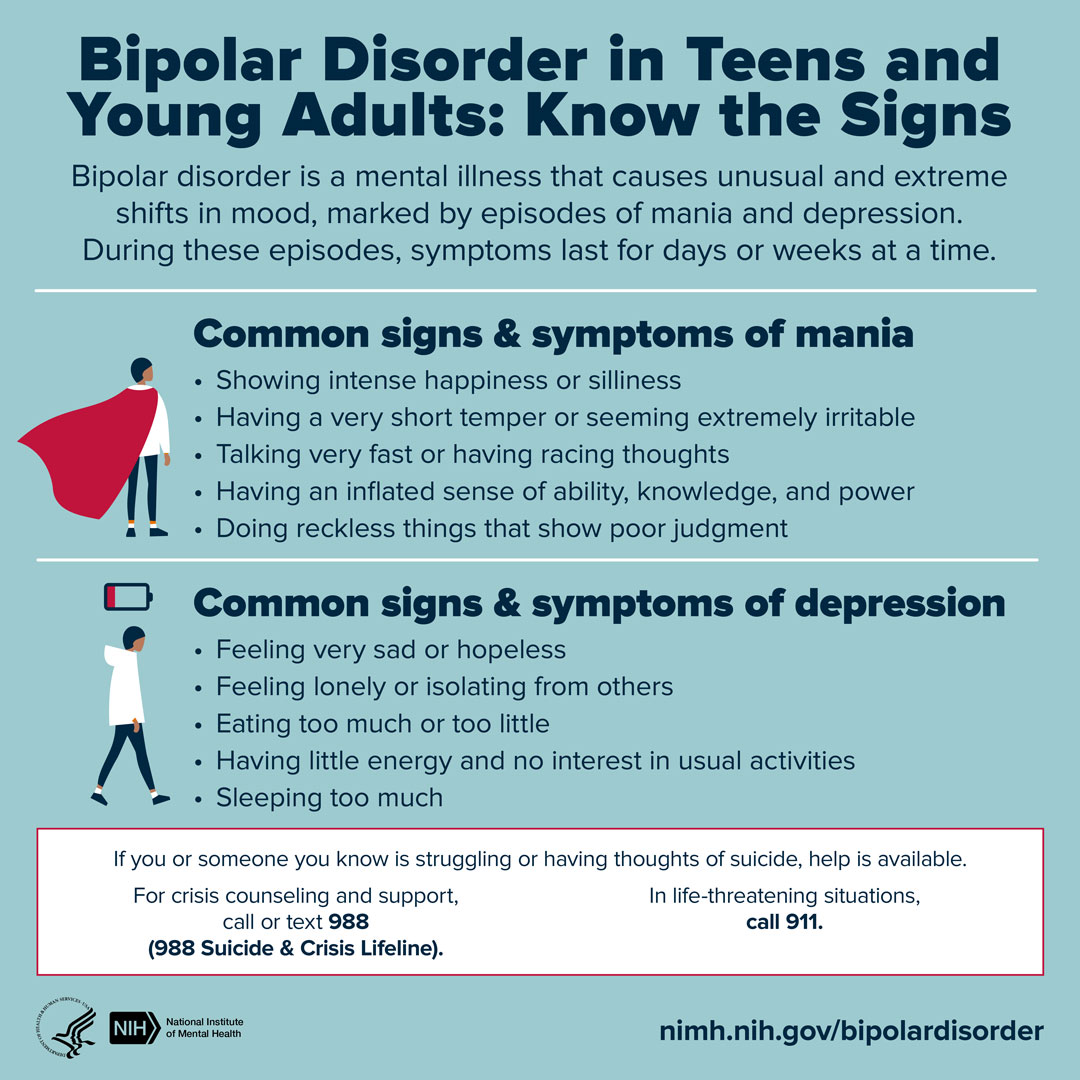
During a manic episode, a person may experience:
- Extremely elevated or irritable mood
- Increased energy or restlessness
- Little need for sleep
- Rapid speech or racing thoughts
- Impulsive or risky behavior (such as overspending or unsafe decisions)
- Inflated self-esteem or feelings of grandiosity
Mania can feel productive or euphoric at first, but it often leads to negative consequences if untreated.
Hypomanic Episodes
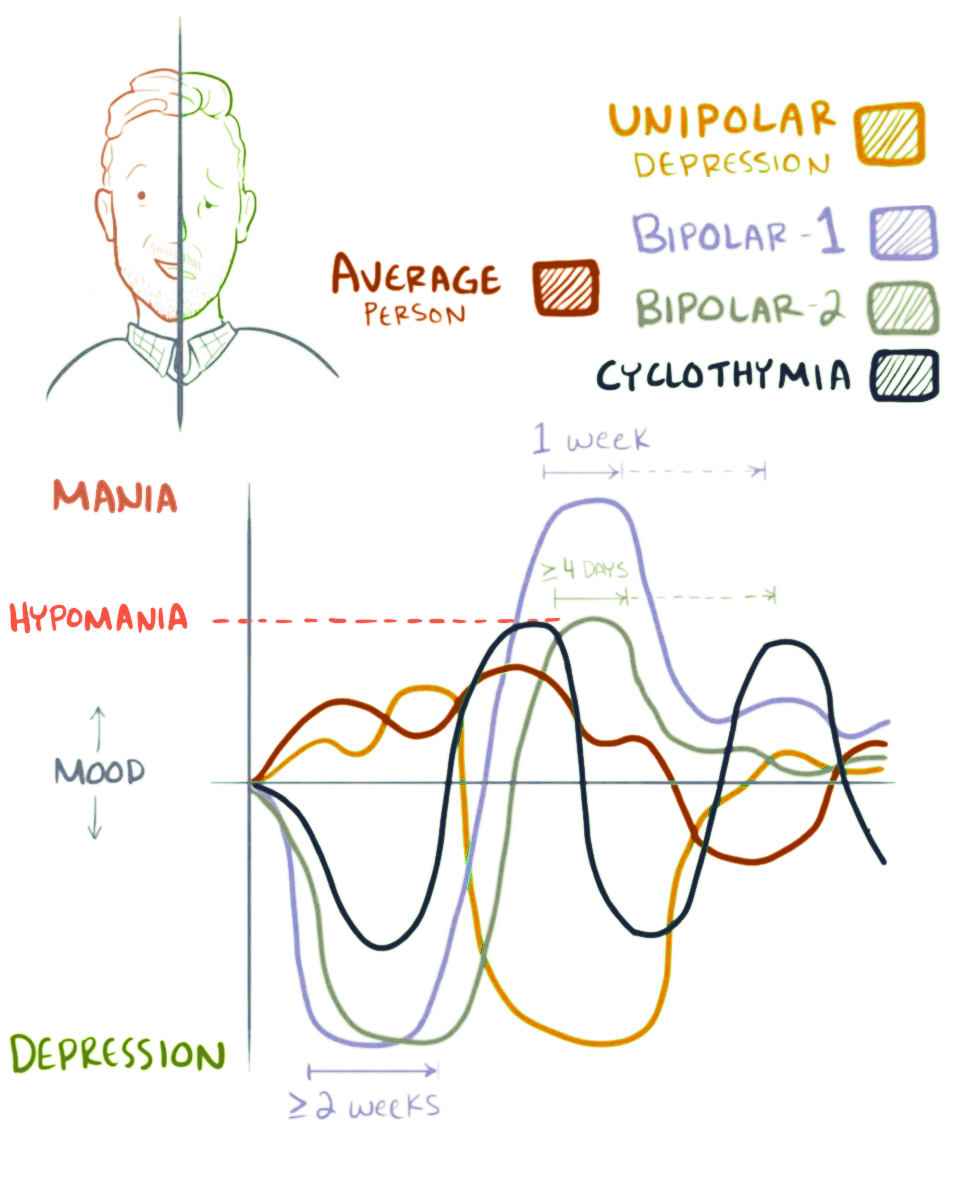
Hypomania is a distinct period of persistently elevated, expansive, or irritable mood accompanied by increased energy and activity. It is similar to mania, but less severe and does not usually cause major impairment in daily functioning or require hospitalization. Despite being milder than mania, hypomania is not simply happiness or confidence. It represents a noticeable change from a person’s usual behavior and emotional baseline.
Depressive Episodes
Depressive episodes may include:
- Persistent sadness or emptiness
- Loss of interest in activities once enjoyed
- Fatigue or low energy
- Difficulty concentrating
- Changes in appetite or sleep
- Feelings of worthlessness or guilt
- Thoughts of death or suicide
These episodes can be deeply distressing and are often the reason people first seek help.
Types of Bipolar Disorder
There are several forms of bipolar disorder, including:
- Bipolar I Disorder: Involves at least one full manic episode, often accompanied by depressive episodes.
- Bipolar II Disorder: Involves hypomanic episodes and major depressive episodes, but no full mania.
- Cyclothymic Disorder: A milder but chronic form involving ongoing mood fluctuations that don’t meet full diagnostic criteria for mania or depression.
Each type presents differently, which is why professional evaluation is essential.
What Causes Bipolar Disorder?
There is no single cause, but contributing factors include:
- Genetics: Bipolar disorder often runs in families
- Brain chemistry and structure: Differences in neurotransmitters and brain function
- Life stressors: Trauma, major life changes, or prolonged stress may trigger episodes
Having these risk factors does not guarantee someone will develop bipolar disorder, but they can increase vulnerability.
Treatment and Management
While bipolar disorder is a lifelong condition, it is highly treatable. Many people live stable, fulfilling lives with proper care. Treatment often includes:
- Mood-stabilizing or antipsychotic medications
- Psychotherapy (such as cognitive behavioral therapy)
- Consistent sleep routines and stress management
- Support from family, friends, and mental health professionals
Early diagnosis and ongoing treatment make a significant difference.
Breaking the Stigma
Stigma is one of the most damaging barriers faced by people living with bipolar disorder. While symptoms can often be managed with treatment, stigma adds an extra burden—silence, shame, and misunderstanding—that can be just as harmful as the illness itself.
Breaking the stigma is not only about changing language; it’s about changing attitudes, systems, and everyday interactions.
What Stigma Looks Like in Real Life
Stigma surrounding bipolar disorder often appears as:
- Being labeled “unstable,” “unreliable,” or “dangerous”
- Having symptoms minimized or dismissed (“everyone has mood swings”)
- Fear of disclosure at work or school due to discrimination
- Being defined solely by a diagnosis rather than seen as a whole person
- Media portrayals that exaggerate or sensationalize symptoms
These misconceptions can discourage people from seeking help, staying in treatment, or speaking openly about their experiences.
The Cost of Stigma
Stigma has real consequences. It can lead to:
- Delayed diagnosis and treatment
- Increased isolation and loneliness
- Lower self-esteem and internalized shame
- Higher rates of untreated depression and suicide risk
- Barriers to employment, housing, and healthcare
When people feel judged or misunderstood, they are more likely to suffer in silence.
Reframing Bipolar Disorder
One of the most powerful ways to challenge stigma is to reframe how bipolar disorder is understood:
- Bipolar disorder is a medical condition, not a personal failing
- Mood episodes are symptoms, not character flaws
- Stability is possible—and common—with proper care
- People with bipolar disorder are coworkers, parents, artists, leaders, and friends
Language matters. Saying “a person with bipolar disorder” rather than “a bipolar person” emphasizes humanity over diagnosis.
The Role of Education
Accurate information is a key antidote to stigma. Education helps people understand that:
- Bipolar disorder exists on a spectrum
- Not everyone experiences extreme or visible symptoms
- Hypomania and depression are often misunderstood or overlooked
- Treatment is ongoing, not a one-time fix
When people understand the condition, fear and judgment tend to decrease.
Listening to Lived Experience
Nothing reduces stigma more effectively than listening to people who live with bipolar disorder. Personal stories:
- Humanize the diagnosis
- Challenge stereotypes
- Show resilience, growth, and recovery
- Encourage others to seek help
Creating space for these voices—without sensationalizing them—builds empathy and connection. In upcoming posts on this blog, I am going to try to share my story about my battles with Bipolar II and how I have managed to face them. It is important to be supportive of people sharing their stories so they don’t feel ashamed of something they should be proud of surviving. Because facing mental health issues can, after all, be a battle for survival.
What Individuals Can Do
Everyone has a role in breaking stigma. You can help by:
- Speaking openly and respectfully about mental health
- Challenging misinformation when you hear it
- Avoiding jokes or casual language that trivialize mental illness
- Supporting friends or coworkers without judgment
- Encouraging help-seeking rather than silence
Small actions, repeated often, create cultural change.
What Workplaces and Communities Can Do
Stigma doesn’t exist only at the personal level—it’s also systemic. Organizations can help by:
- Promoting mental health education and awareness
- Offering flexible policies and accommodations
- Normalizing mental health conversations alongside physical health
- Providing access to support resources
When environments are supportive, people are more likely to thrive.
Hope Through Understanding
Breaking the stigma around bipolar disorder does not mean ignoring its challenges. It means recognizing those challenges without fear, blame, or shame.
Understanding leads to compassion. Compassion leads to support. And support saves lives.
By choosing empathy over assumption and knowledge over myth, we create a world where people with bipolar disorder are not defined by stigma—but empowered by understanding.
Below is a clear, reliable list of national crisis help lines. These services are free, confidential, and available to support people in emotional distress, mental health crises, or thoughts of self-harm.
988 Suicide & Crisis Lifeline
- Call or text: 988
- Chat: 988lifeline.org
- Available 24/7 for anyone experiencing emotional distress, suicidal thoughts, or mental health crises.
Crisis Text Line
- Text: HOME to 741741
- Free, 24/7 text-based support for crises including anxiety, depression, and suicidal thoughts.
Veterans Crisis Line
- Call: 988, then press 1
- Text: 838255
- Specialized support for veterans, service members, and their families.
You are not alone. Reaching out for help is a sign of strength—not failure. If you’re struggling, someone is ready to listen right now.
Final Thoughts
Bipolar disorder is complex, but it is not hopeless. With understanding, treatment, and support, individuals with bipolar disorder can manage their symptoms and thrive. If you or someone you know is struggling with extreme mood changes, reaching out to a mental health professional is a vital first step.
Mental health matters—and understanding is where healing begins. Remember – mental health does not define who you are. You are beautiful inside and out!